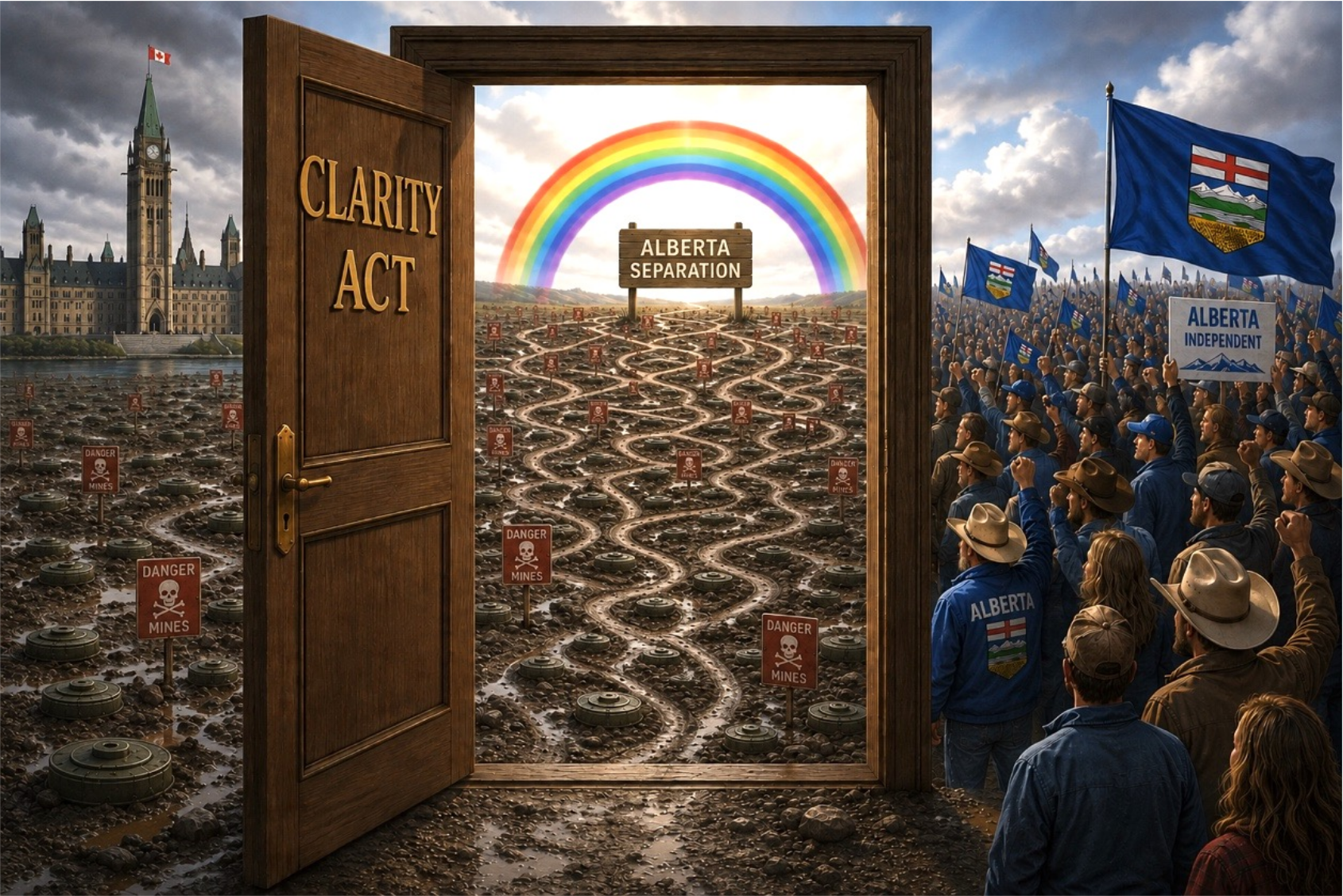
Pierre Trudeau, for all his faults, was a leader. He pulled voters to his way of thinking. Brian Mulroney, though often an opportunist, was somewhat of a leader, taking principled and unpopular stands with the GST and free trade (which, for you young readers, used to be controversial) and selling them on their merits. Preston Manning was a leader when he was on his favourite themes of fighting the deficit and debt, advocating Senate reform or standing up to Quebec. Manning didn’t gain power, yet he was so persuasive at arguing the need to curb spending and control interest costs that the Chretien-Martin Liberals had no choice but to adopt his policies in the mid-90s. Manning and Stephen Harper also spent years pushing a harder federal line to prepare for the next referendum on Quebec separation, with eventual success.

Therein lies an important lesson for Conservative Party members who will select a leader in the coming months: be less concerned between now and the next election about forming government and more interested in exercising influence, in changing the direction of the country’s political discussion. The NDP has never formed the Government of Canada, yet nearly everything in its platform from the 1960s has been implemented. That’s influence!
Moreover, the reduced NDP caucus today still has a better chance than the Official Opposition Conservatives of influencing the direction of policy – on pharmacare, on pipelines, on homelessness, and so on. The NDP has succeeded by doing the hard work of selling its misbegotten ideas through repetition and conviction over a long period of time. Which party forms government matters a lot to career politicians, but it shouldn’t matter so much to the rank-and-file. What should is the long-term impact of the leader they select. A “safe” leader who won’t spin the dial even if elected is worse than a bold leader who moves the needle in opposition. A party that is not lucky enough to be a country’s default ruling organization should choose substance over electability every time. That sounds hard, and it is. But it can work.


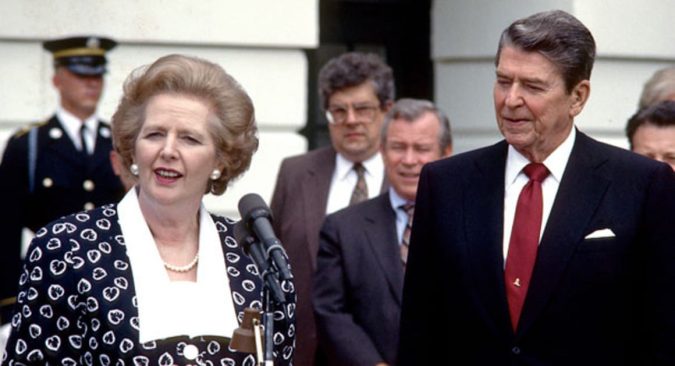

And then – the crux – sticking to the position thanks to a team with the sophistication to have pre-armed the leader with arguments and evidence to counter the guaranteed denunciations that will rain down upon them for months and years. It can be done; conservative leaders around the world are doing the same on equally controversial issues. This mindset would be decidedly unlike leadership candidate Peter MacKay’s pathetic climb-down from his entirely defensible tweet supporting the Edmonton counter-demonstrators who peacefully dismantled the railway blockade, aptly described here. 
Putting our energy sector to use reducing global emissions was the right message in 2019, but Andrew Scheer was afraid to sell it. His policy announcements were mincing and weak, mumbled once or twice and then forgotten. On big issues like climate change, a leader must unveil and then defend his or her position years in advance of an election campaign to have a chance of bringing voters around against a chorus of alarmist rhetoric. Kim Campbell, Mulroney’s hapless appointed successor who led the party to its historic wipeout in the 1993 federal election, almost had it right when she said election campaigns are no time to debate serious issues.
What she should have said (and perhaps meant) is that an election campaign is not the time to start discussing important policy issues – especially when taking unfamiliar positions. Ground needs to be broken, seeds need to be planted, and tender shoots need to be nurtured long before the harvest can be brought in. The aforementioned Reagan, for example, spent virtually his entire life preparing to wage the central campaign of his eventual presidency – rolling back Soviet tyranny and global Communism – and at least one-third of his lengthy career openly campaigning on that subject. Reagan was an exceptional case, of course. But asking a principled Canadian Conservative leader to develop, unveil and then stick to a theme for, say, three or four years between federal elections isn’t unreasonable. It’s simply necessary.

I’m also looking for a Conservative leader who fights back on illegal immigration. Immigration has been sold to Canadians as the remedy to our demographic problems, a solution to our pending labour shortage. But it can only be the solution if the vast majority of immigrants are willing and able to enter the labour force quickly, and remain productive for decades. If we are bringing in more dependents via family reunification and illegal border-jumpers who have no employable skills and speak neither French nor English, we will only worsen our demographic problems and further fray our social fabric. Accordingly, conservatives should be less fussed about the absolute number of immigrants than with the proportion who fall into the economic class.
Conservatives also need to recognize that working immigrants are among the more conservative members of society. They can become party voters. Here, too, there is much potential for a principled and courageous leader backed by an intelligent team, for there are examples worldwide to draw on to illustrate the legitimacy of and need for controlled immigration based on the national interest. A left-of-centre government in New Zealand has even done so. Canada’s left-wing parties are, in fact, out of step not only with ordinary Canadians but most national governments around the world.

I’m looking for a Conservative leader who is vocal against “woke” culture and intersectional victimology. These are the most divisive and destructive ideologies going, pitting everyone against everyone. Some individuals are more privileged than others; but those privileges rarely track demographic traits very well. The solution to educational, nutritional, housing, and other deficits is to fix those deficits where they occur rather than to punish whole classes of allegedly “privileged” people in a failed attempt to equalize outcomes after the fact. The obsession with women as victims is especially nonsensical in an age when women make up majorities not only in post-secondary education but numerous professional fields.
A leader who loudly and proudly proclaims allegiance to conservative principles of justice – that one is innocent until proven guilty beyond a reasonable doubt, that fundamental justice places the onus of proof on the prosecution, and that the accused is entitled to make full answer and defence after the prosecution has closed its case – is badly needed. Gerrymandering the justice system to produce a priori “desirable outcomes” in favour of women or Indigenous people is a debasement that conservatives should never sink to.
Reconciliation with First Nations is critical. I’m looking for a Conservative leader intelligent enough to know there’s no quick fix, but that it is a generational project. You can’t mend broken families and crushed lives from the residential school system, among other largely disastrous paternalistic policies, by issuing apologies and throwing money at band councils. More and more First Nations are realizing that improving their lot requires participation in the national and global economies.

A serious Conservative leader would encourage this evolution by championing tribal leaders who sign benefit agreements with land-use projects of every type: tourism, forestry, mining – and yes, oil and natural gas from ground to processing facility to port. Like everyone else, Indigenous Canadians benefit most from the dignity of work leading to self-sufficiency. That’s conservatism at its finest.
I’m looking for a Conservative leader who isn’t afraid of Rebel News, who doesn’t run over their reporters with buses and get their security to manhandle them, but who actually engages with them and, thereby, their large following. I say this not because Rebel News is the best outlet in the world, but because it isn’t. The left will hate it when you talk to them – but the whole point of your leadership is that you don’t let the left push you around.
We need a leader who wants to sell the conservative message at every opportunity, and shuns none. Even Ron McLean had the courage to give an interview to Rebel News on the matter of Don Cherry’s dismissal, and both parties acquitted themselves rather well. Conversely, I’m looking for a leader who will call out the CBC on its reporting biases, someone who goes on the offensive against the CBC’s hatchet-jobs.

Numerous other courageous and sensible stands could be adduced. It certainly isn’t necessary for a Conservative leader to take a contrarian position on every issue facing the public. Critically needed is a leadership hopeful who takes an intelligent, courageous, conservative, contrarian position on one or two issues – in part to prove it can be done. Last time, Maxime Bernier adopted a principled conservative stand against agricultural supply management and for free markets. That was not a huge deal in itself, but it defined him as a leader unafraid of intelligently slaying sacred cows. More than the policy itself, that is likely what nearly half the party’s membership responded to when Bernier ran. The timid half went with Scheer, won the day, and lost the battle.
Were a Conservative Party candidate to adopt even one of the positions suggested above, it would signal independence of thought and strength of character. Wouldn’t that be refreshing to see in a political leader? Refreshing, and unique, for that person would be the only such federal party leader in a field of opportunists, panderers, utopians and venomous ideologues. Courage, intelligence and principle could become a suit of armour amongst the riotous costumes of the left-wing clowns. At minimum, such a person would lead a far more effective and influential opposition. And with a little luck, he or she might just sweep the field.
Grant A. Brown has a DPhil from Oxford University and an LL.B. from the University of Alberta, taught applied ethics and political philosophy at the University of Lethbridge, practised family law, and currently runs a B&B in Stratford, Ontario.