Stories

Canada’s Trumpian tipping point

Peter Shawn Taylor
February 28, 2018
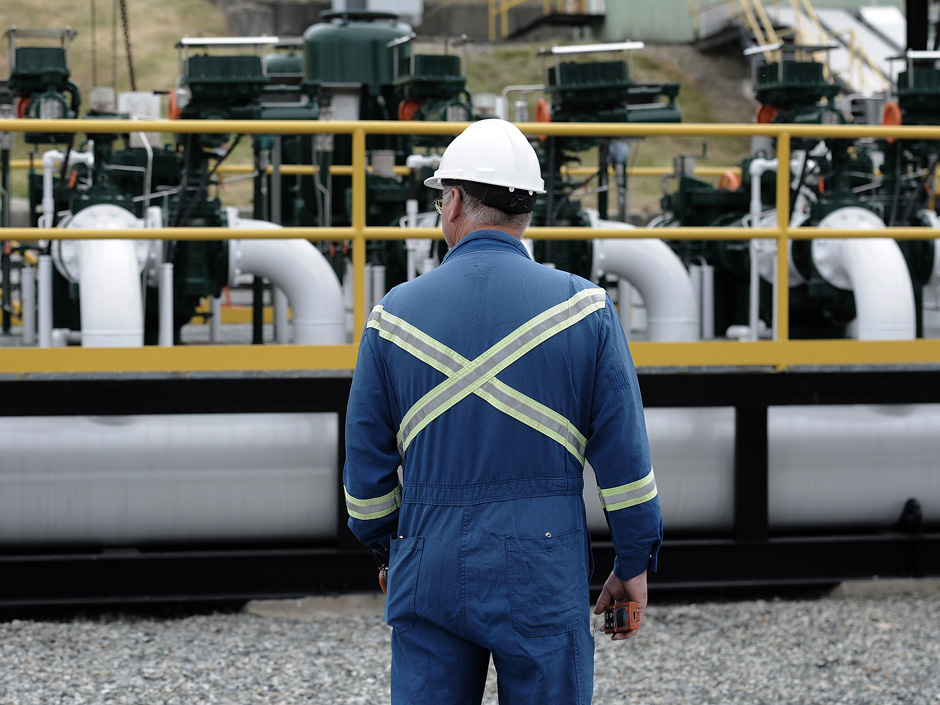
If the oilsands stay in the ground and pipelines and LNG terminals don’t get built, and governments continue to suffocate other natural resource and infrastructure development with excessive taxation and regulation, a lot of Canadians could wind up like the unemployed masses in the U.S. Rust Belt states – and mad enough to vote for a populist demagogue promising to make their lives great again. We’re not there yet, writes Peter Shawn Taylor, but the current rout of capital from Canada’s oilsands represents foreclosure on thousands of high-paying blue collar jobs and raises the risk of a Trumpian political backlash.
Stories

Canada’s Trumpian tipping point

Peter Shawn Taylor
February 28, 2018
If the oilsands stay in the ground and pipelines and LNG terminals don’t get built, and governments continue to suffocate other natural resource and infrastructure development with excessive taxation and regulation, a lot of Canadians could wind up like the unemployed masses in the U.S. Rust Belt states – and mad enough to vote for a populist demagogue promising to make their lives great again. We’re not there yet, writes Peter Shawn Taylor, but the current rout of capital from Canada’s oilsands represents foreclosure on thousands of high-paying blue collar jobs and raises the risk of a Trumpian political backlash.
Share on Facebook
Share on Twitter

Attention environmentalists and assorted politicians eager to shut down Canada’s oilsands: be careful what you wish for. You could be creating the conditions necessary for a Canadian Donald Trump. How’s that for an unintended consequence?

As has been frequently observed, countries around the world have been moving away from the post-war ideals of free trade, open borders and international co-operation and towards a greater focus on national sovereignty and economic populism. Aside from Trump’s chaotic presidency, this trend can be seen in the Brexit vote, as well as the recent success of anti-establishment parties throughout Europe.

Canada, thankfully, offers no evidence of such a shift. For now. All major political parties support immigration – the debate generally centres around appropriate border control – and free trade also enjoys broad public approval. How have we avoided this outbreak of Canada First populism? It’s not because we’re special. It’s because we’ve benefited from wise policy and some very special conditions.

To understand how and why Canada has avoided the politics of exclusion, it’s necessary to unpack what drives it in other countries. Populism is, in general, a symptom of deep concern about economic security, particularly among those most affected by the changes of the 21st century economy. This was particularly true in Trump’s victory. In the key Rust Belt states of Wisconsin, Michigan and Pennsylvania, for example, he won over worried voters by promising to protect manufacturing jobs and defend the country’s borders from illegal immigrants.

Well-paying factory jobs were once the means by which American males without a college education climbed the ladder to success. But the rise of China, increasing automation and a host of other factors have put a roadblock on this path to prosperity – opening the door for Trump’s anti-trade, America First rhetoric. When a significant and vocal segment of voters feel they’re falling behind and have no route to success, we shouldn’t be surprised that they gravitate to politicians who speak to their interests.

In Canada, manufacturing has never been as important to social mobility as it is in the United States. Rather, we have relied on the housing and natural resources sectors to keep economic anxiety at bay. Both offer a steady supply of blue collar jobs for workers from across the country who do not have university education.

Consider Alberta’s oilsands. Between 2002 and 2012, the oilsands received $100-billion in private sector investment. Aside from the obvious employment benefits this provided to Albertans, the Conference Board of Canada calculates that every $1-billion in investment generates an estimated 1,200 person years of employment outside the province. Workers from Newfoundland & Labrador, for example, were often the biggest beneficiaries of Alberta’s insatiable demand for labour, surpassing even neighbouring Saskatchewan and British Columbia in terms of jobs filled. During the boom years any Canadian prepared to work hard knew they could find a job in the oilsands. And this provides a crucial sense of economic security in all provinces.

Alberta’s jobs juggernaut was obviously derailed by the oil market crash of 2015. Thankfully, a red-hot national housing market stepped up to shoulder the burden. Now, however, with a potential slowdown in new home construction given recent interest rate hikes, the burden has fallen back onto the oil patch. And there’s already modest signs of revival – with the price of oil on the rise Alberta is once again reporting net in-migration as workers make their way back to the province.

This tag-team approach to blue collar economic opportunity deserves recognition as a major factor in keeping a lid on disillusioned voters across Canada. As long as there are jobs readily available in the oilsands or housing sectors, blue collar workers with less than a university education need not fret about their future. And this means populist demagogues can’t gain traction by demonizing free trade or too much immigration. A booming oilsands thus act as a crucial safety valve, protecting Canada from the raw populist politics that have convulsed other countries.

So how do Canada’s urban elites treat its oilsands, given the huge economic, political and social benefits at play? Increasingly with extreme prejudice. The federal government makes it nearly impossible to build new pipelines by changing the rules midstream and creating new and ever-stricter regulatory requirements. Investors face constant demands to divest their oilsands stocks on moral grounds. New carbon taxes put even more strain on the sector. Remember, it is the end game of many environmental activists and politicians to shut down the oilsands.

But oilsands opponents haven’t thought through the ultimate consequences of their desire. Shutting down this economic engine of Canada by killing pipeline projects like Energy East, Northern Gateway, and Trans Mountain, and derailing other energy megaprojects like the Pacific NorthWest LNG terminal, means severing an important path to prosperity for a large segment of Canadians. Take away the promise of economic security and upward mobility that the resources sector provides to blue collar workers and they’re likely to become rather resentful. And open to new political voices.

A Canada without an oilsands – and the steady supply of high paying, blue collar jobs it provides – is a Canada susceptible to the siren call of populist politicians. Anyone who thinks Canada is a special country because it has so far avoided the politics of exclusion, should be mindful of what is necessary to keep it that way.


Love C2C Journal? Here's how you can help us grow.

More for you

Too Clever by Half: Why Ottawa’s Clarity Act Helps Neither Side in Alberta’s Separation Debate

The House of Commons once had an effective law in front of it that laid out clear steps to assure that any provincial referendum on independence would be democratic and any negotiations after a “Yes” vote would be fair. But it wasn’t the current Clarity Act – it was a bill put forward by the Opposition Reform Party in 1996, and the Liberal government chose to ignore it. Instead, it passed its own legislation designed to crush support for any subsequent secession movement. In Part II of their series on what the Clarity Act means to today’s debate over Alberta’s future, George Koch and Jim Mason delve into the Act’s origin story and explain why it’s so blatantly stacked in favour of Ottawa – and how that could inflame separatist sentiment and undermine the federalist cause.

Canada’s Other Productivity Crisis: The Daily Irritants That Slow Us Down and Sap Our Spirit

Multi-factor verification. Customer surveys. SMS alerts. Endless online check-ins. Technology was supposed to free up our time for better things. Instead, it has created endless obstacles to getting anything done. Plus there’s the constant impact of government regulations and questionable safety measures that further rob us of our valuable time. Peter Shawn Taylor looks at the absurd and annoying ways that 21st-century life ties us up and grinds us down. While some examples seem faintly comical, taken together they comprise what Taylor argues is a micro-productivity crisis of national proportions that is no laughing matter.

A Mess and Minefield: Ottawa’s Clarity Act on Provincial Separation is Anything but Clear

Proponents of independence for Alberta seem to believe the federal Clarity Act provides a sure pathway to secession should they win a referendum vote. But as Jim Mason and George Koch explain, the Act is less pathway than political minefield. It demands a clear question with a clear majority vote – but offers no criteria for either. It provides no instructions on how separation negotiations should proceed, but it does allow other provinces, Indigenous groups and others to intervene. And it assigns virtually all decision-making to Ottawa. It is, Mason and Koch find in the first of this two-part series, a formula not for resolution but deadlock, virtually certain to frustrate any constitutional effort to secede. Almost like it was designed that way.

More from this author

Canada’s Other Productivity Crisis: The Daily Irritants That Slow Us Down and Sap Our Spirit

Multi-factor verification. Customer surveys. SMS alerts. Endless online check-ins. Technology was supposed to free up our time for better things. Instead, it has created endless obstacles to getting anything done. Plus there’s the constant impact of government regulations and questionable safety measures that further rob us of our valuable time. Peter Shawn Taylor looks at the absurd and annoying ways that 21st-century life ties us up and grinds us down. While some examples seem faintly comical, taken together they comprise what Taylor argues is a micro-productivity crisis of national proportions that is no laughing matter.

What’s Yours is Ours: Why Canada’s Charter Ignores Property Rights and What That Means for Everything You Own

“The whole meaning of life,” famed comedian George Carlin once observed, “is trying to find a place for all your stuff. That’s what your house is, it’s a place for your stuff with a cover on it.” If so, then Canadians should be very concerned about their stuff. Unlike nearly every other modern nation, Canada lacks constitutional affirmation of the right to own property and as protection against its unjust seizure. With a recent B.C. Supreme Court ruling putting the very notion of home ownership at risk, Peter Shawn Taylor seeks out legal opinions on Canada’s surprisingly lax attitude towards property rights, how it differs from other countries and what that means for everyone’s possessions. If Canadians really want to protect their homes, belongings and personal finances, Taylor concludes, now’s the time to get loud.

Cash Constrained: Bill C-2 and Ottawa’s Plan to End Paper Money

“Cash is king, credit is a slave,” George N. McLean wrote in his classic 1890 book How to do Business. More than a century later, it’s still good advice – one that active pro-cash movements in many other countries are recognizing. So why does Ottawa seem determined to put its own banknotes out of commission? In the name of fighting international money-launderers, the Mark Carney government is proposing to outlaw all larger cash transactions and interfere with other key aspects of Canada’s cash economy. Through interviews with experts in business, social policy and politics, Peter Shawn Taylor examines the varied benefits cash provides and asks who stands to gain from a truly cashless society.